

The Courage to Stand Down at the Fractured Bedside
Dr. Ravi Kiran Pothamsetty, Madurai
“I do not believe that sheer suffering teaches. If suffering alone taught, all the world would be wise, since everyone suffers. To suffering must be added mourning, understanding, patience, love, openness and the willingness to remain vulnerable.” – Anne Morrow Lindbergh.
A caregiver once asked me during ward rounds, “Can you extend my father’s life by five more years?” The patient had Stage IV metastatic cancer with a grim prognosis.
There was silence for a moment.
When we spoke further, it became clear that his request was born neither of ignorance nor denial. The patient’s son had recently returned from abroad after a long separation; the plea for time was a desperate attempt to reclaim a fractured relationship just as it was being restored.
Such questions are not uncommon in oncology, yet each time they are asked, something about them still stings. They remain incredibly difficult to address within a standard clinical framework. For this family, the transition did not occur during a single encounter but evolved across multiple bedside discussions.
Within the family, perspectives diverged. Some still wanted another oncologist’s opinion, while others had begun to accept where things were heading. That difference influenced the decisions far more than the medical facts themselves.
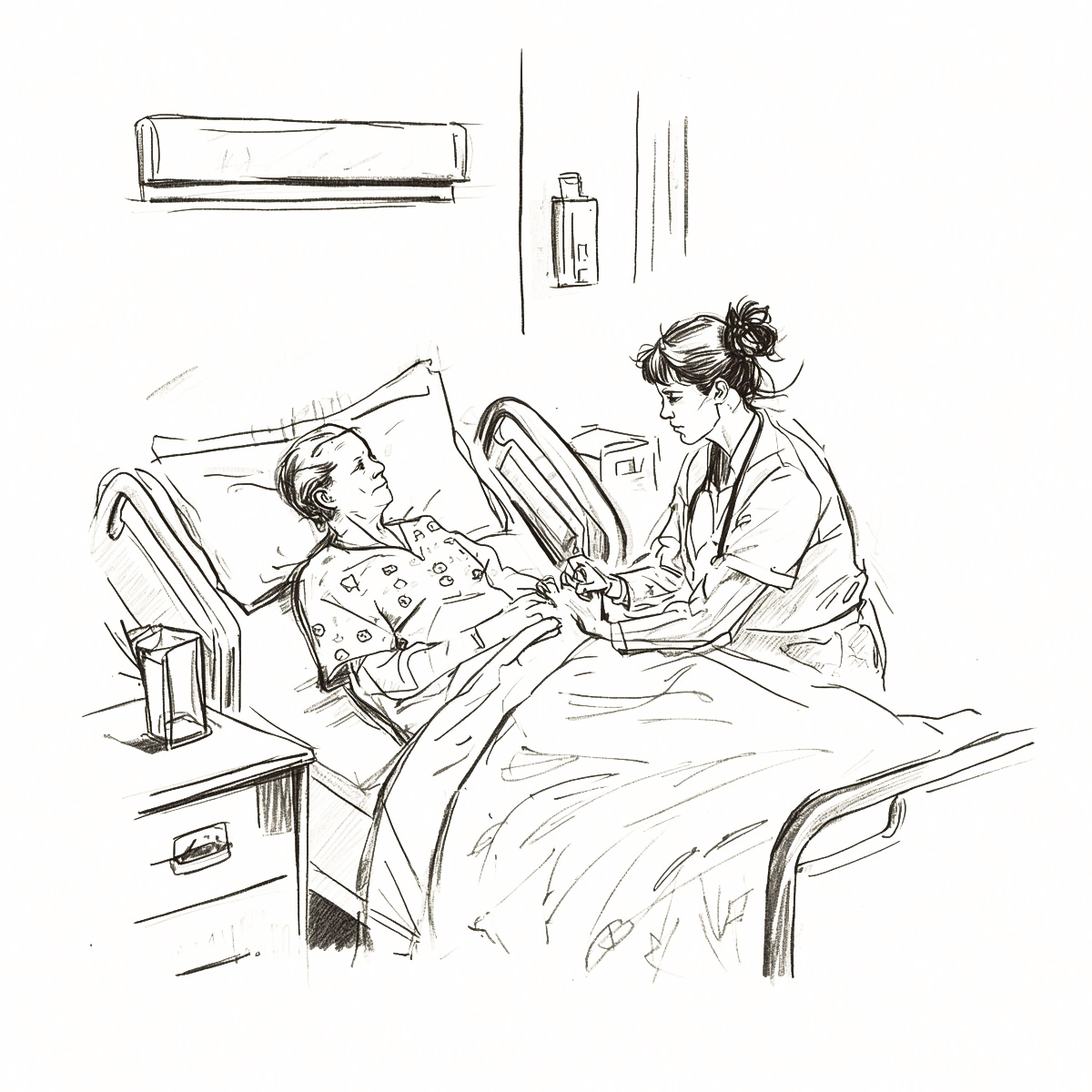
Too often at the bedside, caregivers nod during these discussions without fully accepting the reality being discussed, leaving clinicians to falsely assume a complete understanding of a grave prognosis. Many caregivers hear the words we say, but are not yet able to absorb what those words mean.
Often, the search for another opinion is not about rejecting the facts. It is about finding something to hold on to when the ground suddenly feels uncertain; a visceral struggle that many families experience when confronted with vulnerability and loss of control.
The hardest fractures in end-of-life care happen precisely in the gap between tumour biology and a family’s emotional endurance. Although precision oncology has revolutionized cancer care and expanded therapeutic possibilities to drive remarkable clinical progress, it has also generated a false illusion that clinical outcomes can be altered through sheer effort.
When treatment fails, families and clinicians alike may experience it as a failure despite exhaustive intervention, rather than a biological inevitability. Under this immense pressure, caregivers often hide how much they are struggling. Many fear that visible vulnerability will be mistaken for weakness or interpreted as a sign that they are not doing enough for their loved one. As a result, emotional distress frequently remains unspoken at the very moment when support is needed most.
When the pressure becomes overwhelming, the hospital stops being just a medical facility and becomes an emotional sanctuary. Families lean more on professional staff and institutional infrastructure instead of facing the acute crisis at home, driven by unspoken anxieties:
“Will people think we didn’t try hard enough?”
“Is choosing comfort care presumed to be giving up?”
“How will people judge us after they are gone?”
Evaluating these choices requires looking beyond hospital infrastructure alone and understanding the personal and emotional realities of dying. At the bedside, tumour biology, emotional uncertainty, and the limits of treatment often become deeply tangled.
These domains become even more intertwined in loco-regional tier 2 and 3 cities. In these cities, clinicians face the distinct challenges of massive patient volumes, deeply rooted social contexts, varying levels of illness acceptance, and steep financial disparities. Practicing in these resource-variable environments makes delivering a uniform standard of care an immense uphill task.
Within these real-world health care delivery settings, clinicians often find themselves doing far more than medicine. On any given day, we may become care navigators, counsellors, emotional anchors, advocates, and occasionally simply someone willing to sit and listen. This systemic deficit demands an adaptive clinical nimbleness, requiring practitioners to dynamically pivot between breaking bad news, deliberate silence, and empathetic listening during emotionally charged encounters.
Sometimes, fear and uncertainty make it difficult for families to emotionally process what is happening, even when they understand the medical reality. Knowing and accepting are rarely the same thing. Facts may be understood quickly, but emotions often move at a different pace. In an age saturated with information, the challenge is rarely access to facts; it is finding the words to help patients and families live with what those facts mean. The challenge is that deeply rooted fears and attachments cannot always be resolved through logic alone.
During a subsequent family meeting, this same son who had just returned from abroad asked me pointedly, “Why would a patient select home death when hospital care is medically optimal?”
The room fell silent.
But I actually found a moment to breathe, seeing that this family was shifting from rigid certainty towards a more open discussion of possibilities and limitations. He was not rejecting comfort-focussed care. He was worried that leaving the hospital meant giving up the safety layer that medicine had provided until then. By voicing this out loud, it allowed us to address the hidden anxiety that choosing a home death means settling for less.
Such a preference for home care does not constitute an abandonment of medicine; instead, it reflects a prioritization of psychological safety, dignity, and the comfort of remaining connected to loved ones during advanced clinical decline.

Navigating that delicate line required multiple family meetings. In that final discussion, resolved by addressing his question, the family stopped fighting tumour biology and started protecting their remaining time together.
Palliative care is not, as many believe, ‘the road not taken’; rather, it is a foundational road laid before us that we frequently overlook in our obsession with clinical probabilities and possibilities.
The meeting concluded with the family reaching a shared understanding, transitioning towards hospice and respite care, supported by a backend infrastructure of teleconsultations.
This encounter also made me wonder what might have happened if the patient had eventually reached the ICU, crossing a point of no return. We tried our best to humanize a system that is often heavily driven by numbers and clinical endpoints. In many clinical settings today, the difficulty is not a lack of awareness about palliative care, but a professional and cultural mindset that still struggles to fully accept its role alongside disease-directed oncology care.
Palliative care was never meant to remove uncertainty. Its true power lies in helping patients and caregivers face uncertainty without being consumed by it. True maturity is not becoming emotionless. It is becoming emotionally governed rather than emotionally driven when cancer biology overtakes therapeutic possibilities. In this family, that maturity was reflected not in the absence of grief, but in their gradual ability to focus less on what could no longer be changed and more on what remained meaningful.
Although modern oncology now recognizes quality of life as a clinical endpoint, yet in real-world practice it still struggles with timely integration and consistent alignment across care settings. This gap reflects not a failure of intent, but a lag in clinical culture and systems.
Evidence-based medicine is at its best when timing and precision align with patient-centred goals. The mind that is trained fiercely to heal must also possess the clinical courage to stand down when disease draws its final line. Recognizing these boundaries is never a failure of care, but the very foundation of what we, as healthcare professionals, are truly trained to provide.
About the Author:

Dr. Ravi Kiran Pothamsetty is a Radiation Oncologist and Consultant of Palliative Medicine, leading the institutional palliative care service embedded within the Department of Medical Oncology, at Meenakshi Mission Hospital and Research Centre (MMHRC), Madurai, Tamil Nadu. It is one of the first such models in the region.